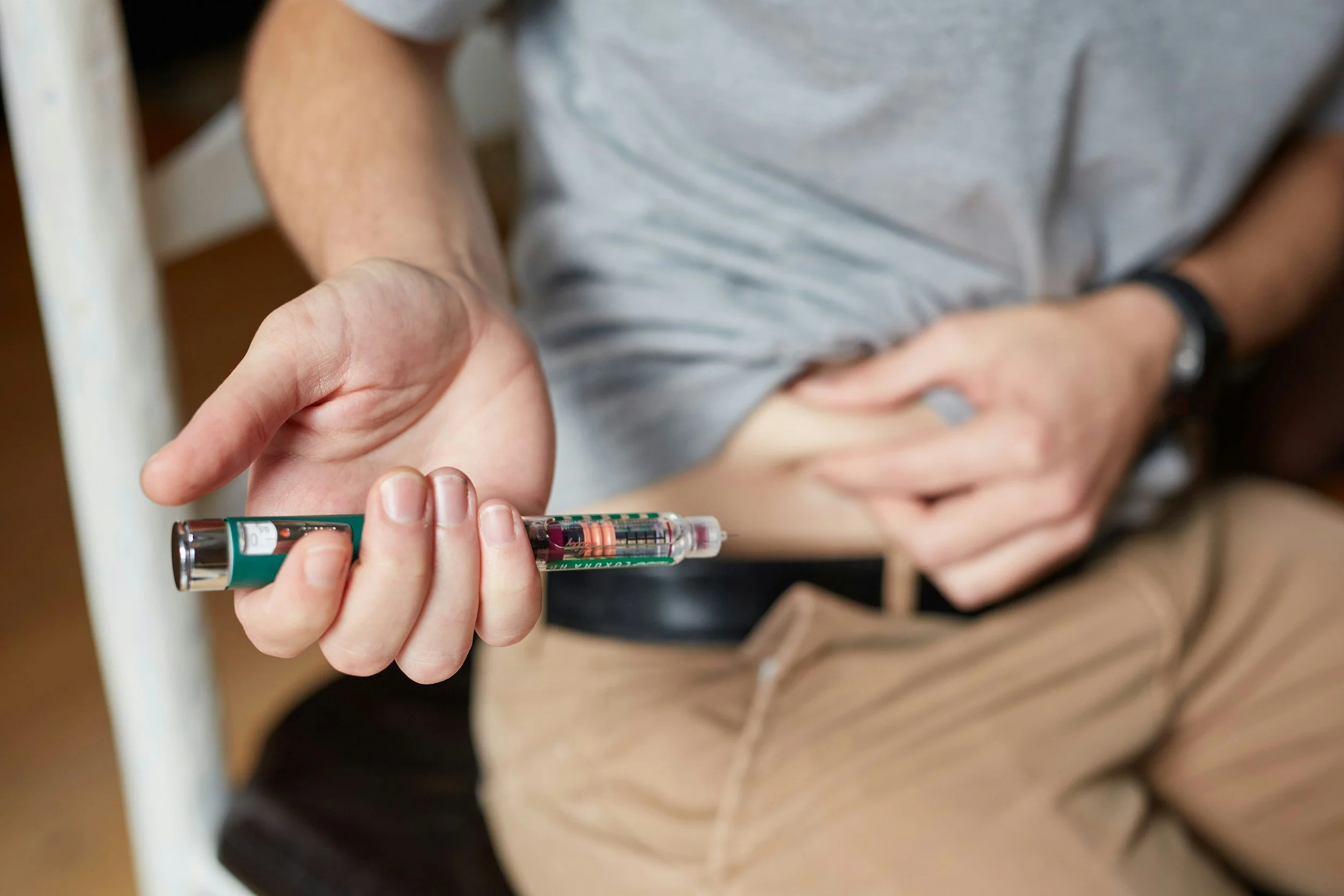
You’ve been on your GLP-1 medication for a few weeks now. Maybe longer. And for most of the week, things feel great. Your appetite is quieter, your portions feel natural, and you’re not thinking about food every 20 minutes.
Then day five or six rolls around.
The cravings start creeping back in. The food noise gets louder. You find yourself standing in the kitchen, staring at the pantry, wondering what happened to all that control you felt two days ago.
Sound familiar? You’re not alone. And you’re definitely not failing. This is one of the most common patterns I see with clients on GLP-1 medications like Ozempic, Wegovy, Mounjaro, and Zepbound. The good news is that once you understand why it happens, there are straightforward strategies that can help you stay in control through the entire dosing cycle.
What’s Actually Happening in Your Body
GLP-1 receptor agonist medications work by mimicking a hormone your body already produces called glucagon-like peptide-1. This hormone plays a major role in blood sugar regulation, appetite signaling, and how quickly your stomach empties after a meal.
When you take your weekly injection, the medication concentration in your bloodstream peaks within the first couple of days. During that window, your appetite suppression is strongest, food noise is quietest, and blood sugar patterns tend to be the most stable.
But here’s what most people aren’t told: that medication concentration doesn’t stay at peak level for seven full days. By day five or six, the active drug level has started to decline. Your GLP-1 receptors aren’t getting the same level of stimulation, and your body’s natural hunger signals start to re-emerge.
This doesn’t mean the medication isn’t working. It means the effect tapers. And that taper is where most people feel the biggest gap between what the medication does and what their food strategy needs to cover.
Why “Food Noise” Gets Louder Before Shot Day
Let’s talk about food noise for a moment, because this is the thing that catches people off guard the most.
Food noise is that constant mental chatter about food. It’s thinking about lunch at 9 AM. It’s replaying what you ate for dinner. It’s the low-level pull toward snacking even when you’re not physically hungry. Many people on GLP-1 medications describe the early weeks as the first time in their lives that food noise went quiet. That’s the medication doing its job at peak concentration.
But as the drug level tapers toward the end of the dosing cycle, those signals start to return. Your brain’s reward centers get a little louder. The hypothalamus, which regulates hunger and satiety, starts receiving weaker signals from the medication. And the result is that familiar pull toward food that feels more emotional than physical.
This is not willpower failure. This is pharmacology. And the answer isn’t to fight through it. The answer is to build a food strategy that bridges the gap.
The Strategy: How to Stay in Control Through the Full Dosing Cycle
1. Front-load Protein at Every Meal
Protein is the most satiating macronutrient. It takes longer to digest, keeps blood sugar more stable, and directly supports the kind of fullness that GLP-1 medications provide at peak dose. On the days when your medication effect is tapering, protein does the heavy lifting.
Aim for 25 to 30 grams of protein at each meal. That might look like three eggs with turkey sausage at breakfast, a grilled chicken salad with chickpeas at lunch, or salmon with roasted vegetables and quinoa at dinner. If you’re someone who tends to eat lighter at breakfast, this is the meal to level up first.
Real-life example:
One of my clients noticed that her hunger always spiked on day six. When we looked at her food journal, breakfast on those days was usually toast and coffee. We shifted to a Greek yogurt parfait with nuts and berries (about 28g protein), and the late-week hunger dropped significantly within two weeks.
2. Pair Every Carb with Fiber and Fat
Carbohydrates aren’t the enemy, but eating them alone on a low-medication day is a recipe for a blood sugar spike followed by a crash, which triggers more hunger and more food noise. The fix is simple: never eat a carb by itself.
Pair it with fiber and fat. An apple with almond butter. Brown rice with avocado and grilled chicken. Whole grain crackers with hummus. These combinations slow digestion, prevent glucose spikes, and keep you feeling satisfied longer. This is especially important in the back half of your dosing week when the medication isn’t buffering those spikes as aggressively.
3. Tighten Up Your Meal Timing
Meal timing matters more than most people think, and it matters even more when your medication effect is fading. Skipping meals or going long stretches without eating on days five through seven can set off a hunger cascade that’s hard to rein back in.
Here’s the framework I use with my clients: eat your first meal within one hour of waking. Space subsequent meals four to five hours apart. And have your last meal within three hours of bedtime. This structure keeps blood sugar steady and prevents the kind of prolonged fasting that amplifies hunger on low-medication days.
Pro tip:
If you’re someone who loses your appetite early in the week and then feels ravenous by day six, that inconsistency in meal timing is part of the problem. Even on days when appetite is low, eating structured meals keeps your metabolism and hunger hormones regulated for the rest of the week.
4. Plan Your Hardest Days in Advance
If you know that days five and six are your toughest, plan for them. Have meals prepped. Know exactly what you’re eating and when. Remove the decision fatigue that makes food noise feel louder than it actually is.
This doesn’t have to be complicated. Even something as simple as writing out tomorrow’s three meals the night before can make a huge difference. When the plan is already made, you’re not negotiating with your brain at 3 PM about whether to grab a snack.
5. Stay Hydrated (Seriously)
Dehydration mimics hunger. On GLP-1 medications, many people drink less water because their overall intake drops along with their appetite. But if you’re not staying hydrated, your body will send hunger signals that have nothing to do with needing food.
Aim for at least 64 ounces of water per day, and more if you’re active. Keep a water bottle visible. Set a reminder if you need to. This one simple habit can reduce perceived hunger on your taper days more than you’d expect.
What This Looks Like in Practice
Let’s put it all together with a sample day for day six of your dosing cycle, the day most of my clients say is the hardest.
Breakfast (within 1 hr of waking)
3 scrambled eggs + 1/2 avocado + salsa on a whole wheat tortilla (28g protein, fiber + fat pairing)
Lunch (4–5 hrs later)
Grilled chicken wrap with mixed greens, hummus, cucumber, and a side of berries (30g protein, fiber-rich carbs)
Dinner (4–5 hrs later)
Baked salmon with roasted sweet potato and steamed broccoli drizzled with olive oil (27g protein, complex carbs + healthy fat)
Hydration
64+ oz water spread throughout the day, herbal tea in the afternoon if cravings spike
Notice the pattern: protein anchors every meal, carbs are always paired with fiber and fat, meals are spaced consistently, and hydration runs throughout the day. This is the structure that bridges the gap when your medication effect is lower.
The Bottom Line
GLP-1 medications are powerful tools. But they’re not designed to do all the work on their own, especially in the back half of your dosing cycle. The hunger that returns before your shot day isn’t a sign that the medication is failing. It’s a signal that your food strategy needs to step in and carry more of the load.
When you combine the right protein targets, intentional carb pairing, consistent meal timing, and a plan for your hardest days, you create a system that works with your medication instead of depending on it.
That’s the difference between riding the GLP-1 wave and actually building a sustainable approach to blood sugar management.
Ready to Build a Plan That Works With Your GLP-1?
If you’re tired of the late-week hunger rollercoaster and want a nutrition strategy designed specifically for your medication schedule, let’s talk. I work with clients one-on-one to build personalized blood sugar blueprints that account for exactly this kind of challenge.
I accept BCBS, UnitedHealthcare, and Anthem. Flexible self-pay options available. Most HSA/FSA plans cover my services.
Book a free discovery call here!